UAE e-invoicing: A Complete Guide for Accountants and Business Owners
If you are searching for UAE e-invoicing, now is the right time to understand it properly. The UAE’s official e-invoicing program is moving from policy into implementation, and businesses that prepare early will have a much smoother path to compliance, cleaner records, and faster finance operations. The Ministry of Finance says its eInvoicing portal is the only official source for the program, and it explains that an eInvoice must be structured electronic data, not a PDF, scanned copy, image, Word file, or email.
Quick answer: what is the UAE e-invoicing requirement?
What is the UAE e-invoicing requirement?
UAE e-invoicing requires invoices and credit notes to be created, exchanged, and reported in a structured electronic format through the official system. Unstructured formats, such as PDF or scanned invoices, do not qualify as eInvoices.
That simple shift matters because e-invoicing is not just a tax update. It affects how you issue invoices, how your systems talk to each other, how your approvals flow, and how your accounting team prepares for audit and reconciliation. For accountants, finance managers, and business owners, this is both a compliance project and an efficiency project.
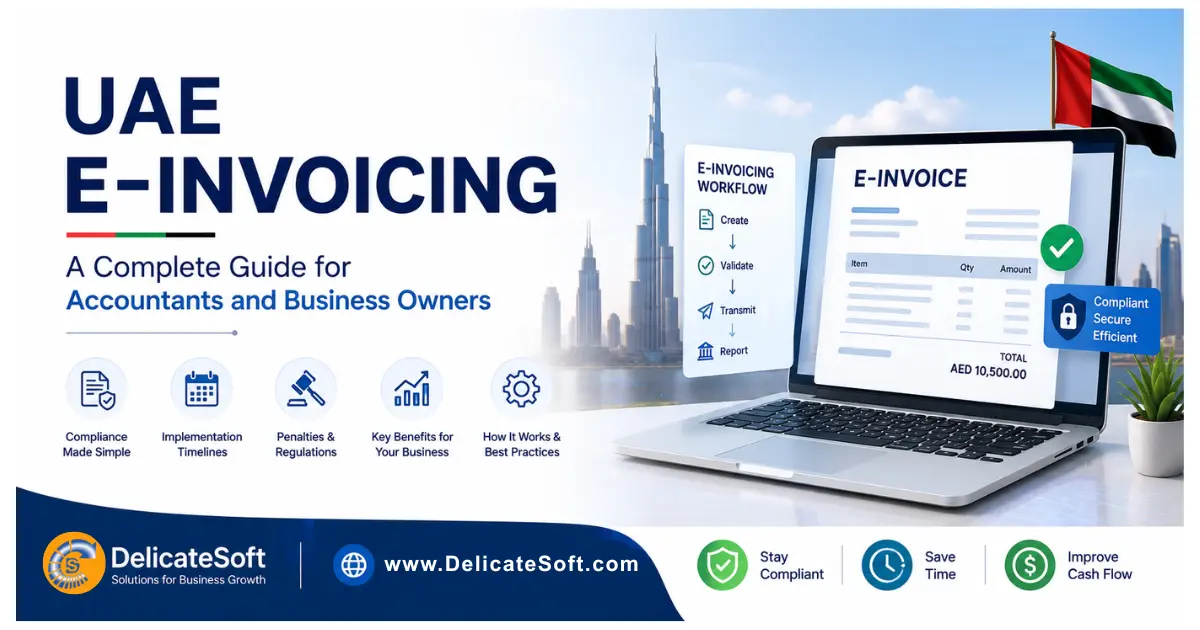
UAE e-invoicing law UAE 2025: what the mandate means
The legal framework is already in place through the Ministry of Finance’s eInvoicing initiative, related ministerial decisions, and Cabinet Decision No. 106 of 2025 on violations and penalties. The official portal also lists the UAE Electronic Invoicing Guidelines, mandatory field requirements, and the accreditation documents for service providers.
The UAE model is described by the Ministry as a Decentralized Continuous Transaction Control and Exchange (DCTCE) model. In practical terms, that means invoice data moves through accredited service providers, is validated, converted into the UAE standard XML format where needed, transmitted to the buyer-side provider, and reported electronically to the tax authority.
Implementation timeline at a glance
| Group | Provider appointment deadline | Go-live deadline | Notes |
|---|---|---|---|
| Businesses with revenue of AED 50,000,000 or more | 31 July 2026 | 1 January 2027 | Must appoint an accredited service provider and implement the system on this timeline. |
| Businesses with revenue below AED 50,000,000 | 31 March 2027 | 1 July 2027 | Later phase, but system readiness still needs planning early. |
| Government entities | 31 March 2027 | 1 October 2027 | Separate government timetable. |
| Voluntary adopters | From 1 July 2026 | From 1 July 2026 | Businesses may implement voluntarily before the mandatory phase. |
Business-to-consumer transactions are not subject to the e-invoicing system at
this stage, and the Ministry says that exclusion remains until a future ministerial decision says otherwise.
For a real-world example, imagine a Dubai trading company with annual revenue of AED 60 million. That business must appoint an accredited service provider by 31 July 2026 and be ready to implement by 1 January 2027. A smaller consultancy has more time, but it still needs to clean up customer master data, invoice formats, and system integrations well before its deadline arrives.
How UAE e-invoicing works in practice
The process starts when the supplier creates invoice data in the agreed format and sends it to its UAE accredited service provider. The provider validates the data, converts it into the standard XML structure if required, and sends it to the buyer’s provider. In parallel, tax data is reported to the authority, and status messages are returned through the chain so each party can confirm what happened.
That means your finance team will need more than a PDF export button. You will need a workflow that can create compliant data, route it through an approved provider, preserve message status, and keep an auditable record of every invoice and credit note. For accounting compliance UAE teams require, the focus is on data integrity, connectivity, and traceability, not just document design.
The main roles in the flow
- Supplier or seller: creates the eInvoice data and sends it through its accredited provider.
- Accredited service provider: validates, converts, transmits, and reports the invoice data.
- Buyer-side provider: receives the invoice, validates it, forwards it to the buyer, and reports the tax data.
- Buyer: receives the invoice in the agreed format and keeps it for its records.
A useful point for software selection is that the Ministry has already published a list of pre-approved eInvoicing service providers, which means businesses should choose a platform that can connect to an accredited provider rather than forcing a manual workaround. That is especially important when you are comparing the best e-invoicing software UAE businesses can realistically use with their existing ERP, accounting, or finance stack.
Penalties for non-compliance
The Cabinet Decision on violations and penalties is clear that non-compliance can become expensive quickly. If an issuer fails to implement the system, including failing to appoint an accredited service provider by the prescribed deadline, the penalty is AED 5,000 for each month or part of a month of delay.
Other penalties include AED 100 for each electronic invoice not issued and transmitted on time, up to AED 5,000 per calendar month, and the same structure for electronic credit notes. There is also an AED 1,000 per day penalty for delays in notifying the authority about system failures or changes to registered data.
For finance leaders, that makes timeline discipline essential. The cost of waiting is not limited to software procurement, because delays can affect workflow design, staff training, test transactions, and data cleanup.
Key benefits of UAE e-invoicing
The Ministry of Finance says the program is designed to support digitalization, efficiency, the digital economy, reduced VAT leakage, economic contribution through better data, and stronger security. It also says e-invoicing can reduce invoice processing costs by up to about 66% in markets that have successfully implemented similar systems.
That is why e-invoicing should be seen as more than a regulatory burden. Done well, it can improve cash flow, reduce manual corrections, and give management more reliable financial visibility. The Ministry specifically notes that standardized and automated invoice exchange reduces errors, supports near real-time delivery, and helps speed up payment cycles.
The practical benefits for your business are often felt in daily operations:
- fewer manual invoice errors,
- faster approval cycles,
- stronger audit trails,
- better cash-flow visibility,
- less paper handling,
- and a more secure exchange of invoice data.
There is also a cross-border angle. The Ministry says the system is built around a proven standard that can support invoice exchange beyond the UAE, which is useful for companies with regional suppliers or customers.
Common challenges and how to overcome them
The biggest challenge is usually not the law itself. It is software compatibility. Many businesses still rely on legacy accounting tools, spreadsheet-based approvals, or PDF invoicing habits that will not map neatly into a structured e-invoicing environment.
1) Legacy systems that do not support structured data
If your current system cannot produce clean invoice fields, XML-ready outputs, or reliable API integration, you will need to upgrade or add a compatible layer before the deadline. The safest approach is to test invoice data early, rather than waiting until go-live month.
2) Poor master data quality
A compliant invoice is only as good as the underlying customer, supplier, tax, and item data. If names, tax numbers, addresses, or payment terms are inconsistent, your validation errors will grow quickly. Clean your master data before integration, not after.
3) Manual invoice habits
If your team is used to printing, emailing, and archiving invoices manually, the change can feel disruptive. Training is essential, but so is a simple internal workflow that shows staff exactly when an invoice is created, validated, transmitted, accepted, or rejected.
4) Unclear ownership between finance and IT
E-invoicing works best when finance owns the tax and approval logic, while IT or your software partner handles connectivity, security, and testing. Assign one owner for compliance and one owner for implementation, then run both streams together. That structure reduces last-minute confusion.
5) Choosing the wrong vendor
When evaluating the best e-invoicing software UAE businesses should look for accredited-provider compatibility, reliable data mapping, audit logs, and a clear implementation roadmap. The Ministry’s pre-approved provider list is the best place to start, because it anchors your selection in the official ecosystem rather than in a generic invoice app.
How our software solutions simplify compliance
E-invoicing may be the headline change, but your broader finance stack still matters. Businesses that already run organized payroll, expense, and payment workflows usually find it easier to keep records aligned across departments. That is where integrated back-office software becomes valuable.
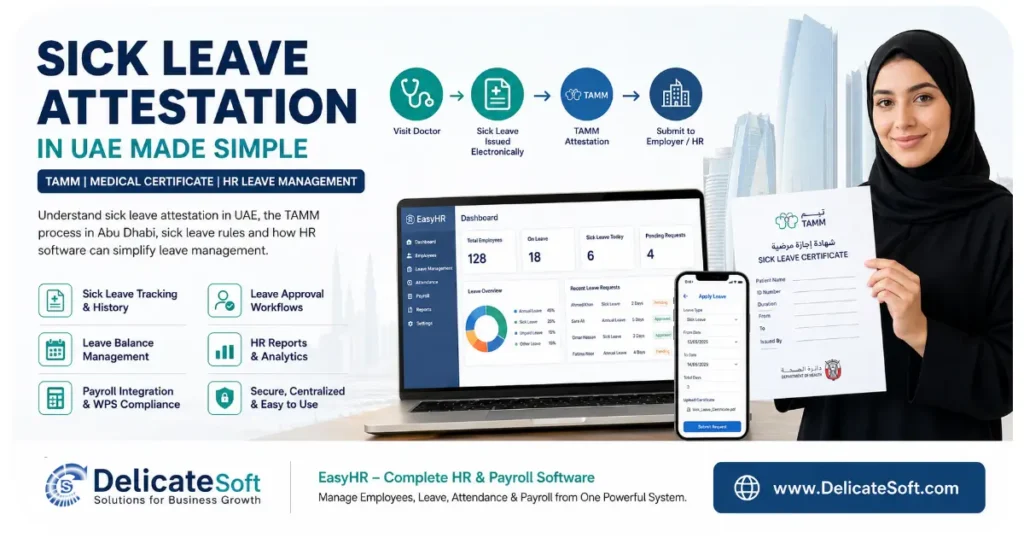
For example, our payroll software helps keep salary-related records, employee data, and routine finance reporting consistent, which reduces reconciliation work when your accounting team is preparing monthly statements or audit files. It does not replace e-invoicing, but it supports the same discipline of accuracy, structure, and traceability that compliance teams need.
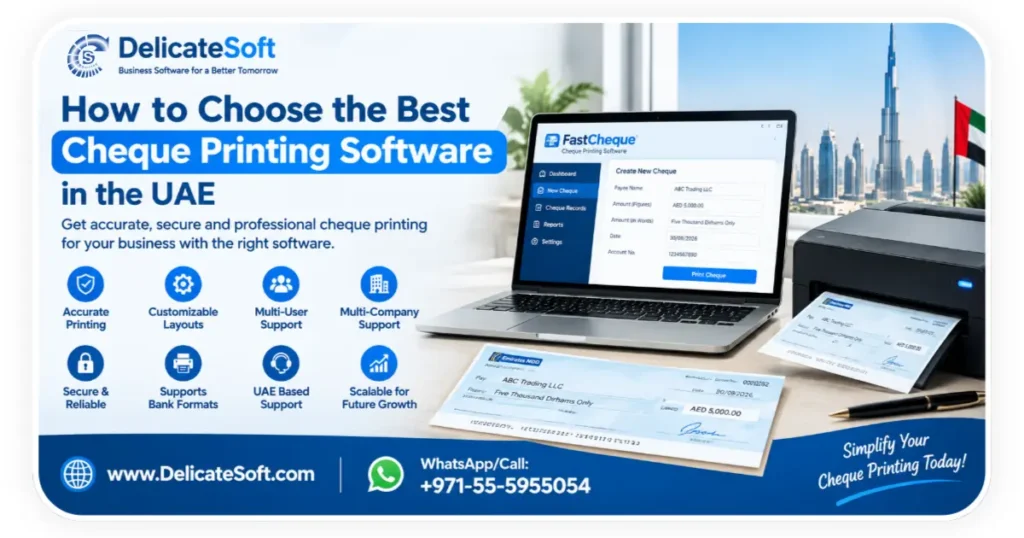
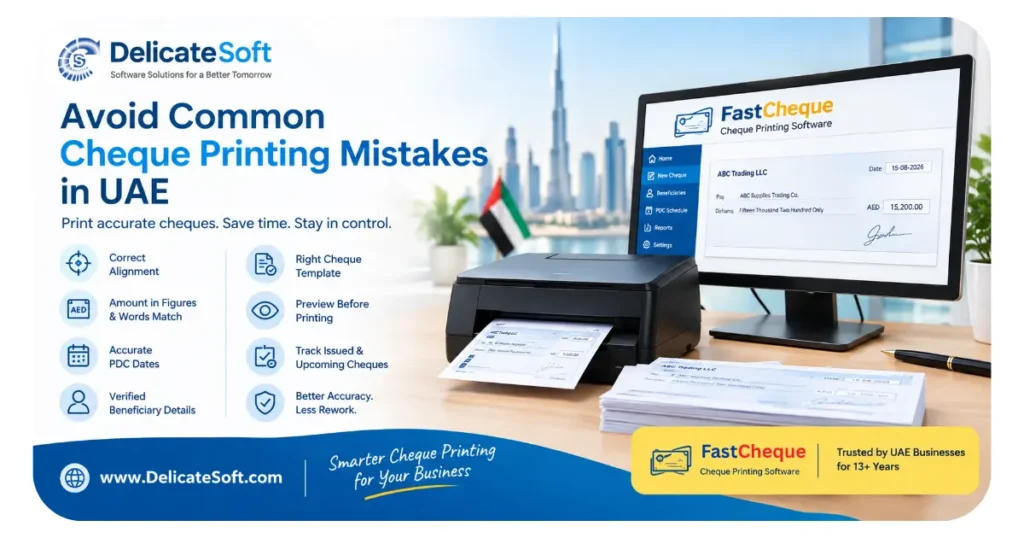
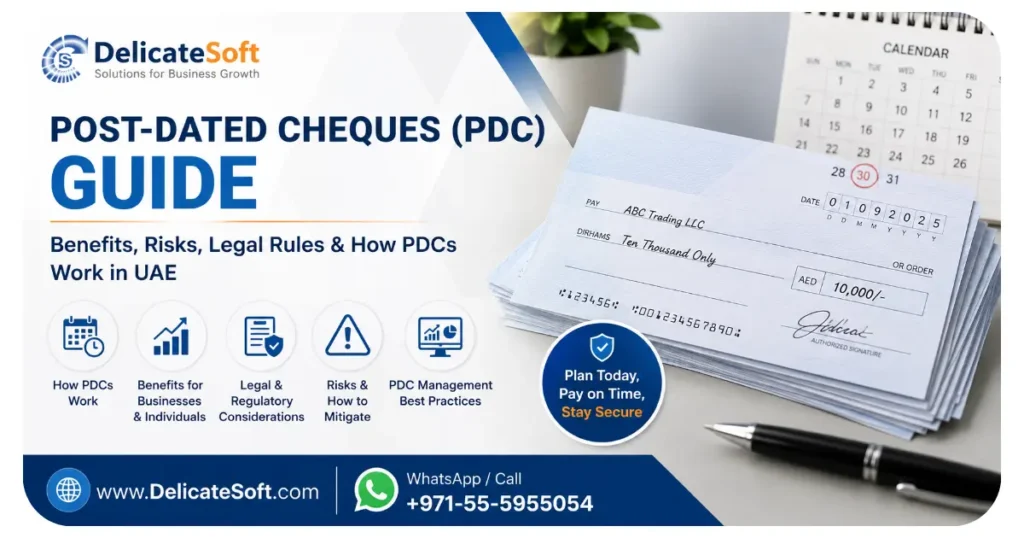
Likewise, our cheque printing software can help businesses standardize payment issuance after invoices are approved. That is especially useful for companies that still pay suppliers or contractors by cheque and want cleaner documentation, fewer manual entry mistakes, and a better audit trail.
Taken together, these tools support a more controlled finance environment. When invoice approval, salary records, and payment output all follow structured processes, your team spends less time correcting avoidable errors and more time managing cash flow and compliance.
Final thoughts
UAE e-invoicing is not just another compliance checkbox. It is a new operating model for how invoices are created, exchanged, and reported, and the businesses that prepare early will be better positioned for smoother audits, faster payments, and lower processing costs. The Ministry’s official guidance makes the direction clear, structured data, accredited providers, and phased rollout.
If you start now, you can use the transition to improve finance controls rather than simply react to a deadline. That means cleaning data, testing integrations, training staff, and selecting software that supports your actual workflow, not just the minimum requirement.
Ready to streamline your e-invoicing process? Explore our integrated payroll software and cheque printing software, or book a free consultation through our contact page. You can also ask our team for a free e-invoicing readiness checklist to help you plan the next steps.