Emiratisation under the Nafis program requires private sector companies in the UAE with 50 or more employees to increase Emirati workforce representation by 2% annually in skilled roles. Non-compliance results in monthly fines starting from AED 6,000 per unmet Emirati position, increasing yearly.
The following guide breaks down the essential quotas, deadlines, and the cost of non-compliance, while highlighting how automation can simplify these complex requirements.
What is Emiratisation (Nafis) in the UAE?
Emiratisation is a UAE government initiative aimed at increasing the employment of UAE nationals in the private sector. The Nafis program supports this goal by providing incentives, training, and salary support for Emirati hires.
It is enforced by the Ministry of Human Resources and Emiratisation (MOHRE), making compliance mandatory for eligible companies.
Who Must Comply with Emiratisation Quotas?
Companies must comply if they meet the following criteria:
- Private sector companies registered in the UAE
- Employed 50 or more employees
- Have skilled workforce categories (as defined by MOHRE)
Exemptions (Limited Cases)
- Free zone companies, depending on authority rules
- Small businesses with fewer than 50 employees
- Certain specialized sectors (case-to-case basis)
Emiratisation Quota Requirements (2026)
To stay compliant, companies must:
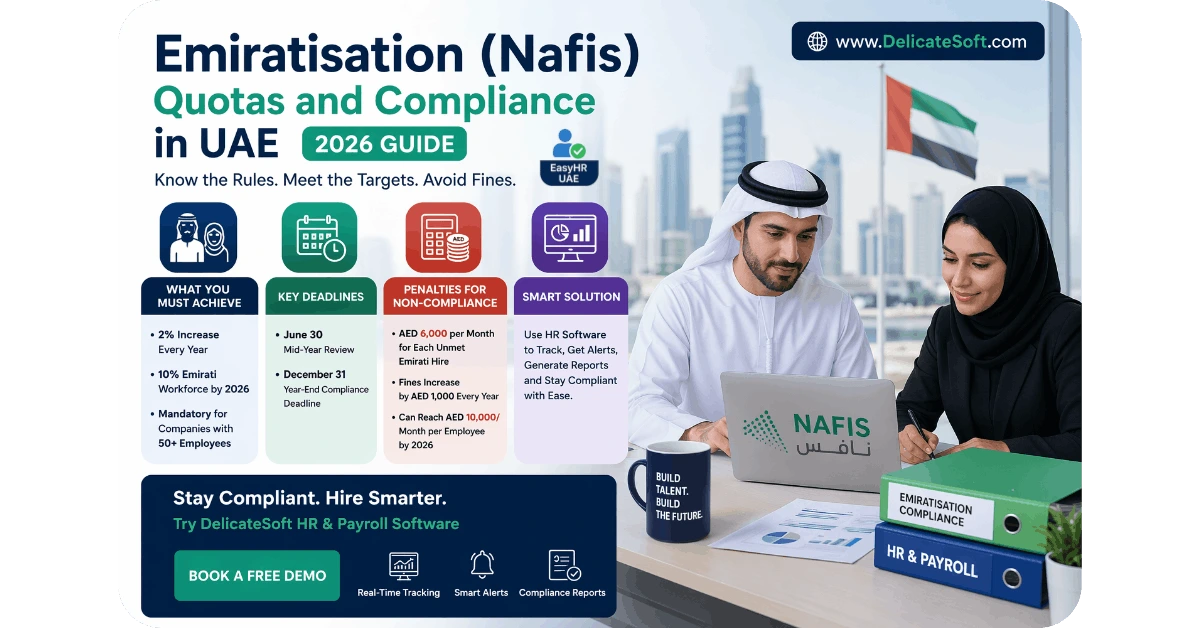
- Increase Emirati employees by 2% annually in skilled roles
- Achieve minimum 10% Emiratisation by 2026
- Maintain continuous growth every year
Example:
- If your company has 100 skilled workers
- You must hire at least 2 Emiratis per year
Fines and Penalties for Non-Compliance
Non-compliant companies face strict financial penalties:
- AED 6,000 per month for each unmet Emirati hire
- Fine increases by AED 1,000 every year
- Can reach AED 10,000/month per employee by 2026
Additional Consequences:
- Suspension of new work permits
- Downgrading of company classification
- Increased government scrutiny
- Loss of Nafis benefits and incentives
What You Must Achieve (2026 Rule)
- 2% Emiratisation increase every year
- Up to 10% total Emirati workforce target
- Mandatory for companies with 50+ employees
Key Deadlines::
- June 30, mid-year check
- December 31, final compliance deadline
👉 How to calculate Emiratisation percentage
Emiratisation % = (Emirati Employees in Skilled Roles ÷ Total Skilled Workforce) × 100
How to Ensure Emiratisation Compliance
To stay compliant and avoid penalties, companies should:
1. Track Workforce Composition
- Monitor total employees vs Emirati hires
- Separate skilled vs unskilled workforce
2. Plan Hiring Strategically
- Hire Emiratis gradually, not at year-end
- Align recruitment with quota targets
3. Maintain Accurate Records
- Keep updated employee data
- Ensure contracts and job roles meet MOHRE standards
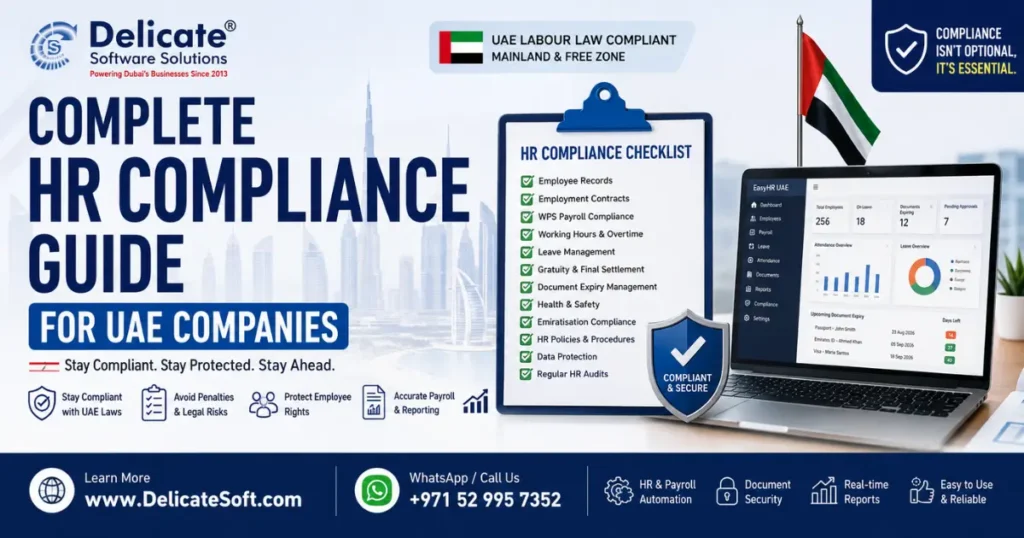
4. Use HR Software for Compliance Tracking
Manual tracking leads to errors and fines.
A smart HR system can help you:
- Track Emiratisation percentage in real-time
- Get alerts before deadlines
- Generate compliance reports instantly
- Avoid costly penalties automatically
How EasyHR Simplifies Emiratisation Tracking
Manually tracking headcounts and skilled worker ratios is prone to error, especially as your company grows. This is where specialized HR and Payroll software becomes indispensable.
Our EasyHR system is designed specifically for the UAE market, ensuring that compliance is integrated into your daily workflow rather than treated as a year-end panic.
Key Features for Emiratisation Compliance:
- Real-time Quota Dashboards: Instantly see your current Emiratisation percentage against MOHRE targets.
- Automated Nafis Reporting: Generate the necessary data and documents required for Nafis portal updates.
- WPS & Payroll Integration: Ensure that all Emirati employees are correctly paid through the Wage Protection System (WPS).
- Skill Classification Alerts: Automatically flag which roles count toward “skilled” quotas based on MOHRE criteria.
💡 By automating these processes, business owners can focus on talent development rather than worrying about sudden administrative fines.
Conclusion: Strategic Hiring for a Sustainable Future
Emiratisation is a strategic opportunity to diversify your workforce and contribute to the UAE’s national vision. To avoid the financial burden of non-compliance, companies should audit their current workforce and implement robust HR technology.
Is your business ready for the next Emiratisation deadline?
Explore how EasyHR by Delicate Software Solutions can automate your compliance tracking and payroll needs.
Visit www.delicatesoft.com to book a demo today.
Note: This article is for informational purposes only and does not constitute legal advice. For specific legal guidance, consult a UAE-qualified employment lawyer or MoHRE certified consultant.