UAE Salary Guide 2026: Salary Trends, Industry Benchmarks, and Hiring Insights
Understanding salary trends is essential for employers, HR professionals, recruiters, and job seekers operating in the UAE. As businesses continue to expand across Dubai, Abu Dhabi, Sharjah, and the Northern Emirates, competition for skilled professionals remains strong, particularly in technology, finance, healthcare, construction, logistics, and renewable energy.
This UAE Salary Guide 2026 provides an overview of the latest salary trends UAE, hiring patterns, compensation benchmarks, and workforce expectations. Whether you are planning your recruitment budget, reviewing employee compensation, or negotiating a new role, this guide will help you make informed decisions.
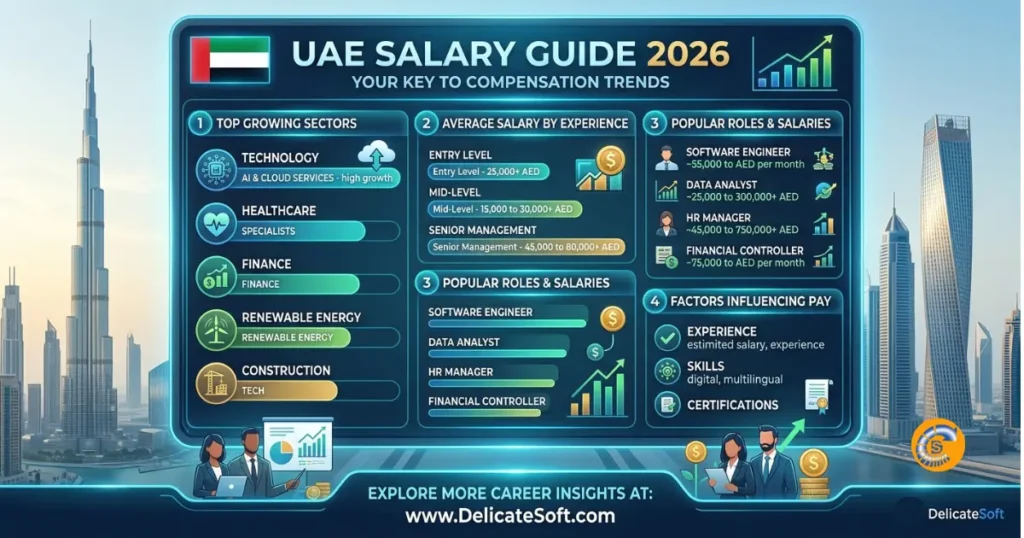
Why Salary Trends Matter in 2026
The UAE continues to attract global talent because of its growing economy, tax-friendly environment, world-class infrastructure, and ambitious government initiatives. Employers are increasingly balancing competitive salaries with flexible work arrangements, career development opportunities, and attractive employee benefits.
Several factors are influencing compensation across the UAE in 2026:
- Continued economic growth across key industries
- Digital transformation and AI adoption
- Increasing demand for highly skilled professionals
- Emiratisation compliance requirements
- Rising housing and education costs
- Greater focus on employee wellbeing and retention
- Expansion of multinational companies into the UAE
As a result, salary benchmarking has become an essential HR function rather than an annual exercise.
Key UAE Salary Trends 2026
1. Moderate Salary Growth Across Most Industries
The majority of employers are budgeting annual salary increases between 3% and 6% during 2026. Companies experiencing rapid growth or facing talent shortages may offer even higher increases for critical roles.
Industries showing the strongest salary growth include:
- Artificial Intelligence
- Cybersecurity
- Cloud Computing
- FinTech
- Healthcare
- Renewable Energy
- Digital Marketing
- Data Analytics
Traditional sectors such as administration and customer service continue to experience steady but more modest salary growth.
2. Dubai Remains the Highest Paying Employment Market
According to recent Dubai salary survey trends, Dubai continues to offer some of the most competitive salaries in the Middle East, particularly within:
- Financial Services
- Technology
- Hospitality Leadership
- Luxury Retail
- Aviation
- Real Estate
International companies headquartered in Dubai frequently offer attractive compensation packages that include bonuses, medical insurance, housing allowances, education support, and relocation assistance.
3. Abu Dhabi Compensation Continues to Grow
Abu Dhabi compensation packages remain highly competitive, especially within government entities, oil and gas, energy, defence, healthcare, and infrastructure sectors.
Professionals with specialist technical expertise often receive:
- Higher base salaries
- Long-term incentive plans
- Annual performance bonuses
- Housing allowances
- Family benefits
- Professional development support
4. Employee Benefits Are Becoming More Valuable
Modern employees evaluate the complete employment package rather than salary alone.
Today’s most attractive benefits include:
- Flexible working arrangements
- Hybrid work options
- Performance bonuses
- Comprehensive medical insurance
- Annual airfare
- Housing allowance
- Child education allowance
- Wellness programs
- Learning and certification budgets
- Career development plans
Companies offering stronger benefits often experience better employee retention even without paying the highest salaries.
5. AI and Digital Skills Command Premium Salaries
Technology continues to reshape every industry.
The highest demand is currently seen for professionals skilled in:
- Artificial Intelligence
- Machine Learning
- Data Science
- Cybersecurity
- Cloud Infrastructure
- Microsoft Azure
- AWS
- SAP
- Oracle ERP
- HR Analytics
- Business Intelligence
- DevOps
- Automation
Professionals with globally recognized certifications frequently negotiate significantly higher compensation packages.
Top Factors Affecting Salaries in the UAE
Several factors influence employee compensation.
Industry
Technology, banking, healthcare, aviation, and energy generally offer higher salaries than retail or traditional administration.
Experience
Professionals with 8 to 15 years of experience typically command the largest salary increases due to leadership responsibilities.
Qualifications
International certifications remain highly valued, including:
- PMP
- ACCA
- CPA
- CFA
- AWS
- Microsoft
- Cisco
- SHRM
- CIPD
Company Size
Large multinational corporations usually provide:
- Higher salaries
- Better bonuses
- Structured career paths
- International mobility opportunities
Small and medium-sized businesses may compensate through faster promotions and greater flexibility.
Emiratisation
Government initiatives continue to encourage employment of UAE Nationals, leading to attractive compensation packages, leadership development programs, and long-term career opportunities. Here is a compete guide on UAE Emiratization.
UAE Salary Benchmarks by Industry (2026)
The following table provides estimated monthly salary ranges in AED. Actual salaries vary based on company size, experience, qualifications, and location.
| Industry | Entry Level | Mid-Level | Senior Level |
|---|---|---|---|
| Technology & IT | AED 8,000 to 15,000 | AED 18,000 to 35,000 | AED 40,000 to 70,000+ |
| Banking & Finance | AED 9,000 to 16,000 | AED 20,000 to 40,000 | AED 45,000 to 80,000+ |
| Healthcare | AED 8,000 to 18,000 | AED 20,000 to 38,000 | AED 45,000 to 75,000+ |
| Construction & Engineering | AED 7,000 to 15,000 | AED 18,000 to 35,000 | AED 40,000 to 65,000 |
| Logistics & Supply Chain | AED 6,000 to 12,000 | AED 15,000 to 28,000 | AED 35,000 to 55,000 |
| Sales & Marketing | AED 6,500 to 14,000 | AED 16,000 to 30,000 | AED 35,000 to 60,000 |
| Human Resources | AED 7,000 to 14,000 | AED 16,000 to 30,000 | AED 35,000 to 55,000 |
| Hospitality Management | AED 5,500 to 12,000 | AED 14,000 to 25,000 | AED 30,000 to 50,000 |
Figures are indicative market estimates and may vary depending on employer, emirate, benefits, and job responsibilities.
Most In-Demand Skills in the UAE Job Market
Employers increasingly prioritize practical skills alongside academic qualifications.
Some of the most sought-after skills include:
Technology
- AI Development
- Data Analytics
- Cybersecurity
- Cloud Computing
- Software Engineering
- Automation
Finance
- Financial Planning
- Compliance
- Risk Management
- ESG Reporting
- Investment Analysis
Human Resources
- HR Analytics
- Payroll Management
- Employee Experience
- Compensation Benchmarking
- Workforce Planning
- Talent Acquisition
Sales & Marketing
- Digital Marketing
- CRM Management
- Performance Marketing
- SEO
- AI Content Strategy
Leadership
- Strategic Planning
- Change Management
- Project Management
- Communication
- Business Transformation
Regional Hiring Outlook
Dubai
Dubai continues to lead recruitment activity across:
- Technology
- Financial Services
- Tourism
- Real Estate
- Retail
- Aviation
- E-commerce
Companies are actively recruiting professionals with international experience and digital capabilities.
Abu Dhabi
The strongest hiring sectors include:
- Government
- Energy
- Healthcare
- Infrastructure
- Defence
- Artificial Intelligence
- Advanced Manufacturing
Employers continue investing heavily in specialist technical talent.
Northern Emirates
Sharjah, Ajman, Ras Al Khaimah, Fujairah, and Umm Al Quwain continue experiencing growth in:
- Manufacturing
- Logistics
- Education
- Healthcare
- Construction
- SME businesses
Competitive compensation is increasingly being offered to attract experienced professionals.
Employee Benefits UAE: Beyond Basic Salary
Competitive employers understand that attracting talent requires more than increasing salaries.
Popular employee benefits UAE companies now offer include:
- Annual bonuses
- Comprehensive health insurance
- Flexible working hours
- Hybrid work
- Remote work options
- Housing allowance
- Transport allowance
- Annual air tickets
- Child education support
- Paid professional certifications
- Employee wellness initiatives
- Mental health support
- Retirement planning
A strong benefits package can significantly improve employee retention while strengthening employer branding.
How Employers Can Stay Competitive
Maintaining competitive compensation requires more than reviewing salaries once a year.
Forward-thinking organizations are increasingly using HR software UAE solutions to make data-driven compensation decisions.
Best practices include:
- Conduct regular salary benchmarking against current market data.
- Review compensation for high-performing employees before annual appraisal cycles.
- Use WPS payroll systems to identify compensation trends across departments.
- Analyze overtime, allowances, incentives, and benefits through payroll analytics.
- Monitor employee turnover and retention costs.
- Build transparent salary structures linked to performance and career progression.
- Benchmark employee compensation across locations including Dubai and Abu Dhabi.
Modern HR software also enables organizations to automate payroll, manage employee benefits, generate workforce reports, and support strategic compensation planning.
Tips for Employers
To remain competitive in today’s hiring market:
- Review salaries annually using reliable market benchmarks.
- Reward high performers with meaningful performance bonuses.
- Invest in employee training and professional certifications.
- Offer flexible work arrangements where possible.
- Strengthen employer branding through career development opportunities.
- Monitor emerging salary trends rather than reacting after employees resign.
- Leverage HR analytics to support compensation decisions.
Tips for Job Seekers
Professionals can improve their earning potential by:
- Researching market salary ranges before interviews.
- Building in-demand digital skills.
- Obtaining internationally recognized certifications.
- Highlighting measurable achievements instead of listing responsibilities.
- Considering the full compensation package, including employee benefits.
- Developing leadership and communication skills.
- Staying informed about hiring trends across Dubai and Abu Dhabi.
Here is a complete guide on how to start a creative career in UAE.
Related Resources
To better understand HR compliance and workforce management in the UAE, you may also find these resources helpful:
- Read our guide on UAE Labour Law and employee rights.
- Explore our article on End-of-Service Gratuity Calculation in the UAE.
- Learn how payroll automation improves HR efficiency for UAE businesses.
These guides complement this salary report and provide practical insights for employers and HR professionals.
Conclusion
The UAE employment market remains one of the most dynamic in the region. While salary growth has stabilized, employers continue competing aggressively for skilled professionals, especially in technology, finance, healthcare, and leadership roles. Organizations that combine competitive salaries with strong employee benefits, career development opportunities, and data-driven compensation strategies will be better positioned to attract and retain top talent.
For HR professionals, staying informed about the latest UAE salary guide 2026, salary trends UAE, Dubai salary survey, and Abu Dhabi compensation benchmarks is essential for effective workforce planning and long-term business success.
For a detailed, real-time salary analysis tailored to your organization, explore our HR software tools at https://delicatesoft.com/hr-and-payroll-software/.